
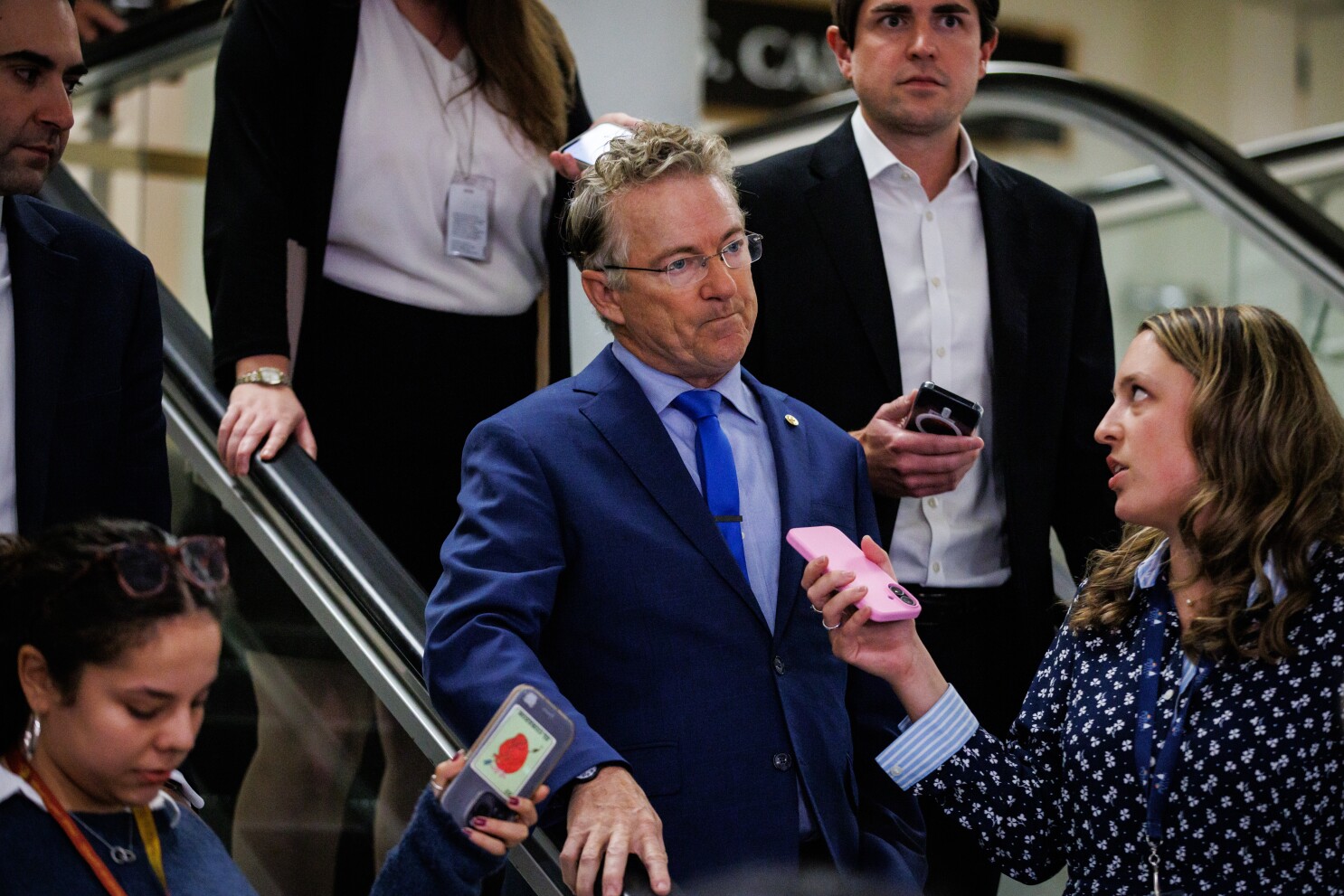
A Republican senator said last week that the growing federal crackdown on hemp-derived THC products is being driven not just by concerns about consumer safety, but by lobbying pressure from the alcohol industry and parts of the state-legal cannabis market seeking to protect their turf.
Speaking on The Joe Rogan Experience, Sen. Rand Paul (R-Ky.) described how restrictive language targeting hemp THC was folded into a must-pass federal spending bill signed into law in November. The provision, which Paul attempted unsuccessfully to block, sets the stage for sweeping limits on consumable hemp products nationwide.
When host Joe Rogan asked who was behind the push, Paul said the effort reflected overlapping interests among competing legal markets.
“There was a little bit of the alcohol lobby and the cannabis lobby,” Paul said. “The cannabis people hate the hemp people.”
Paul explained that while state-legal marijuana businesses are confined by federal prohibition and cannot ship products across state lines, hemp operates under different rules. Hemp was federally legalized through the 2018 Farm Bill, allowing companies to sell hemp-derived THC products nationally, including via mail order.
“The hemp, because it was legalized nationally, they were selling it across state lines,” Paul said, noting that large companies have built businesses around hemp gummies and similar products.
Paul attributed the restrictive provision to Senate Minority Leader Mitch McConnell (R-Ky.), calling it a product of long-standing political influence. Rather than explicitly banning hemp THC, the language sets a maximum limit of 0.4 milligrams of THC per container—an amount Paul said effectively eliminates most products from the market.
“Frankly, the THC is the effect,” Paul said, arguing that the threshold makes hemp THC commercially unworkable and could force farmers to redesign crops to remain compliant.
Throughout the discussion, Paul framed the policy as an example of regulatory imbalance, contrasting the availability of prescription drugs with criminal penalties for hemp products. Rogan added that some family members found hemp-derived products more effective when small amounts of THC were present.
Paul said his position was not an endorsement of cannabis use, but a defense of adult choice.
“I’m for the freedom to take it,” he said.
Perhaps most notably, Paul suggested that some state-licensed cannabis businesses oppose federal legalization because it would allow interstate commerce and disrupt their protected markets.
In that light, Paul framed the hemp crackdown less as a public health measure and more as a struggle between industries competing over access to consumers—a dynamic now playing out under the banner of regulation.
Read the whole article from High Times here.